Is the Dubai Rental Market Finally Cooling Down in 2026?
The Dubai rental market is shifting in 2026 — and the headlines aren’t giving you the full picture. Some areas are softening. Others are rising. And for investors, yields remain among the strongest in the world. So before you make any decisions, here’s what’s actually happening right now.
The Short Answer: It Depends on Where You Are
The Dubai rental market isn’t moving in one direction. Instead, it’s splitting — and that split is getting sharper.
Average rents across the UAE dropped 5.4% between January and April 2026, with the residential sector seeing the steepest dip — down around 7%, from AED 120,000 to AED 111,600 over the same period.
That sounds significant. However, zoom in and the picture gets more nuanced. The softening is concentrated in specific zones. In many areas, rents are still holding firm — or rising.
Where Rents Are Falling
The areas seeing the most easing are mostly apartment-heavy, mid-market communities. The reason is straightforward: new supply.
According to Alec James Smith, Head of Sales and Leasing at Savills Middle East, any softening is largely supply-driven rather than demand-driven. Areas such as JVC, Arjan, Dubai Silicon Oasis, Discovery Gardens, and Sports City are experiencing more stable or slightly easing rents due to a significant volume of new stock becoming available, giving tenants more choice and negotiating power.
Importantly, this isn’t a market in distress. It’s a rebalancing after a period of very rapid rental growth, as supply catches up with demand. That’s a healthy correction — not a warning sign.
Where Rents Are Rising
Meanwhile, on the other end of the Dubai rental market, things are moving in the opposite direction entirely.
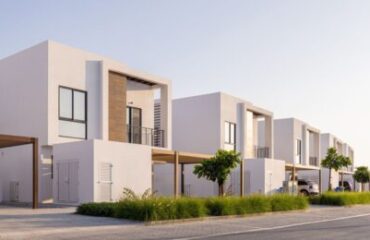
Established villa and prime lifestyle communities continue to see stable to rising rents. Locations such as Palm Jumeirah, Jumeirah Golf Estates, Dubai Hills Estate, Arabian Ranches, and Tilal Al Ghaf remain highly sought after, driven by high-net-worth individuals and families committing to Dubai for the long term.
Limited luxury stock, combined with a strong preference for space, quality, and community living, continues to support rental growth in these areas.
So while apartment rents ease in oversupplied zones, villa and premium community rents are holding strong. Two very different stories — and both true at the same time.
What the Broader Numbers Actually Show
Despite the softening in specific pockets, the overall Dubai rental market is far from weak.
In Q1 2026, rental contracts worth AED 32.2 billion were signed. A total of 118,385 new contracts were recorded alongside 135,607 renewals. Crucially, contract cancellations dropped by 25% — a clear signal of growing stability, with fewer sudden exits or disputes between landlords and tenants. Gulf News
High renewals matter here. When tenants choose to stay rather than leave, that reflects genuine confidence. It also limits vacant stock — which is part of why rents aren’t collapsing even where supply is rising.
The Slowdown Is Real — But So Is the Context
To understand the Dubai rental market properly, you need the full picture of where it came from.
Year-over-year rent growth has slowed to around 4–6% in early 2026, down from the double-digit increases seen in 2023 and 2024. That sounds like bad news. In reality, it’s the market maturing — not breaking.
As Cushman & Wakefield Core’s Prathyusha Gurrapu put it, the Dubai residential market is “transitioning into a more balanced phase following several years of exceptional growth.” A market that grew 12–22% annually was never going to sustain that pace. What we’re seeing now is a landing — not a crash.
What This Means for Investors
For investors, the Dubai rental market still delivers something most global cities simply can’t match: strong, tax-free yields.
Gross rental yields in areas like International City and JVC are averaging 7–9% — among the highest returns available in any major global real estate market. Compare that to London or New York, where typical yields sit at 2–4%, and Dubai’s advantage remains enormous.
Furthermore, the areas seeing rent softening — JVC, Arjan, DSO — are also the same areas that deliver the highest yields. A slight dip in rent in a zone returning 8% still leaves investors significantly ahead of what most global markets offer at full price.
What This Means for Tenants
For tenants, the shift in the Dubai rental market is genuinely good news — particularly in mid-market areas.
Mid-term rentals are expected to feel the most pressure, with average summer rents dipping by up to 5% compared to recent years. High-season pricing, however, is holding steady — from October to April, rents are forecast to sit close to 2024–2025 levels.
Tenants in new-supply zones now have more negotiating room than at any point in the last three years. That said, one important reality applies: for new contracts, rental prices have dropped — but if you’re already living in the area, your rental price is less likely to fall.
The Dubai Rental Market in 2026: At a Glance
| Factor | Detail |
|---|---|
| Overall rent movement | Down 5.4% across UAE (Jan–Apr 2026) |
| Residential sector dip | Down ~7% in the same period |
| Q1 2026 contract value | AED 32.2 billion |
| New contracts | 118,385 |
| Renewals | 135,607 |
| Contract cancellations | Down 25% year-on-year |
| Rent growth rate | 4–6% YoY, down from 12–22% in 2024 |
| Best yields (apartments) | 7–9% in JVC, International City |
| Rising rent areas | Palm Jumeirah, Dubai Hills, Arabian Ranches |
| Softening rent areas | JVC, Arjan, DSO, Discovery Gardens |
Grovy Perspective: A Balanced Market Is a Healthier Market
Years of double-digit rent growth made headlines. However, they also priced out tenants and created pressure that was never going to hold forever.
What we’re seeing now in the Dubai rental market isn’t a reason to worry. It’s a reason to be strategic. The strongest communities — built around genuine amenity, real infrastructure, and trusted developers — are holding their rental value. The areas softening are those where supply outpaced planning.
At Grovy, we build in communities where rental demand is structural. That means our owners aren’t chasing the market. They’re holding in it — because the fundamentals underneath their investment are real.
Conclusion: The Dubai Rental Market Isn’t Dropping — It’s Maturing
Rents in parts of Dubai are easing. That’s true. However, the Dubai rental market as a whole remains active, high-yielding, and backed by one of the strongest tenant demand stories in the world.
The buyers and investors who understand the difference between a market cooling and a market correcting are the ones who will make the right call in 2026.
Want to understand what the current rental market means for your investment in Dubai? Speak to our team — no pressure, just the real picture.
Sources & References
- Property Finder — propertyfinder.ae
- Dubai Land Department / RERA — dubailand.gov.ae
- Gulf News — gulfnews.com
- Savills Middle East — savills.com
- Cushman & Wakefield Core — cushmanwakefield.com
- Allsopp & Allsopp — allsoppandallsopp.com
- Sands of Wealth — sandsofwealth.com
- What’s On UAE — whatson.ae
- Time Out Dubai — timeoutdubai.com