Dubai Land Residence Complex (DLRC): Why Investors Are Watching This Growing Dubai Community
Dubai’s investment pipeline keeps producing new areas worth a second look, and Dubai Land Residence Complex (DLRC) is increasingly becoming one of them.
The reason is not simply that it offers a lower entry price than Dubai’s established prime communities. DLRC combines relatively accessible property prices with strategic road connectivity, proximity to Dubai’s education and employment hubs, an active residential market and a substantial pipeline of new development.
The community is also no longer just a speculative future district. Current transaction data shows thousands of property sales taking place across the area, while new residential projects continue to add supply and attract investors.
For investors, the more useful question is therefore not whether DLRC is “the next big thing”, but whether its current pricing still leaves enough room for rental income and long-term capital growth as the community matures.
What DLRC is
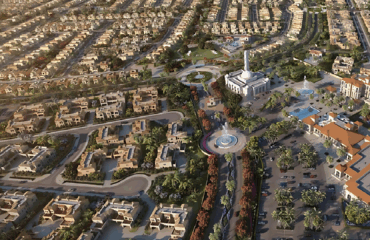
DLRC stands for Dubai Land Residence Complex, a mixed-use residential community within Dubailand.
According to Dubai Holding Communities’ official DLRC community profile, the community spans nearly 14 million square feet and is strategically located along Dubai–Al Ain Road (E66) and Emirates Road (E611).
It combines residential and commercial spaces with open areas and community amenities. Dubai Holding Communities currently lists 49 buildings, approximately 21,200 residents and 38 recreational amenities across the community, including clinics, children’s play areas, outdoor gyms and sports courts.
It is also important to clarify that DLRC is not a single residential project with one developer. It is a wider community containing projects from multiple developers.
Current market data shows a large number of individual developments within DLRC, including projects by developers such as Imtiaz, Samana, Wadan, Prestige One and Grovy.
That distinction matters for investors. Buying in DLRC means choosing not only a location, but a specific project, developer, building, payment plan and position within the community.
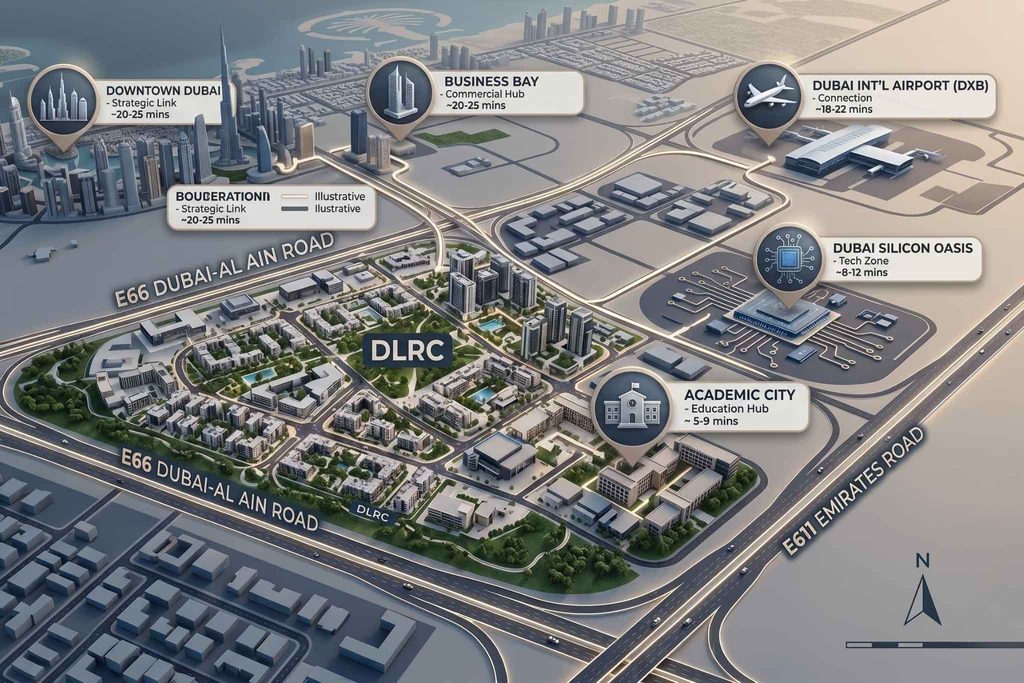
Location and connectivity
DLRC’s location is one of its strongest structural advantages.
The community sits along Dubai–Al Ain Road (E66) and close to Emirates Road (E611), providing road access to several major parts of Dubai.
According to Dubai Holding Communities, DLRC provides access to important destinations including Academic City, Meydan Racecourse and Dubai International Airport.
The location also places residents close to Dubai Silicon Oasis and Dubai Academic City, creating a potential tenant pool that includes students, academics, professionals and families working in the surrounding areas.
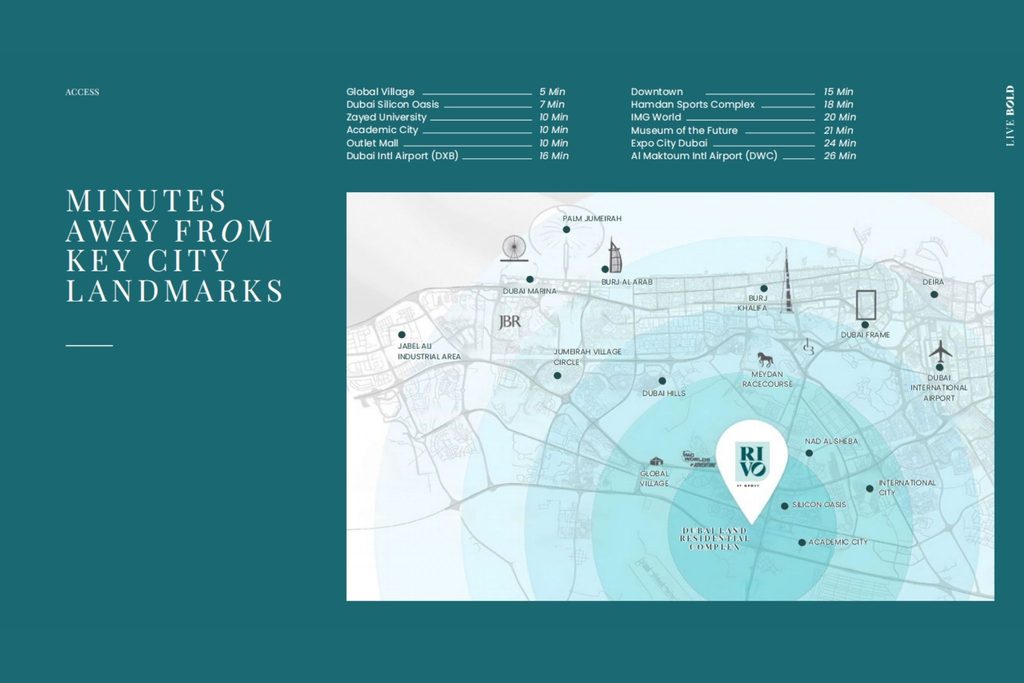
Indicative driving times commonly quoted for developments in the area include:
- Dubai Academic City: approximately 5–10 minutes
- Dubai Silicon Oasis: approximately 5–10 minutes
- IMG Worlds of Adventure: approximately 10 minutes
- Global Village: approximately 10–15 minutes
- Dubai Outlet Mall: approximately 10–15 minutes
- Downtown Dubai: approximately 20–25 minutes
- Dubai International Airport: approximately 20–25 minutes
Actual journey times will vary depending on the specific project and traffic conditions.
The future transport story
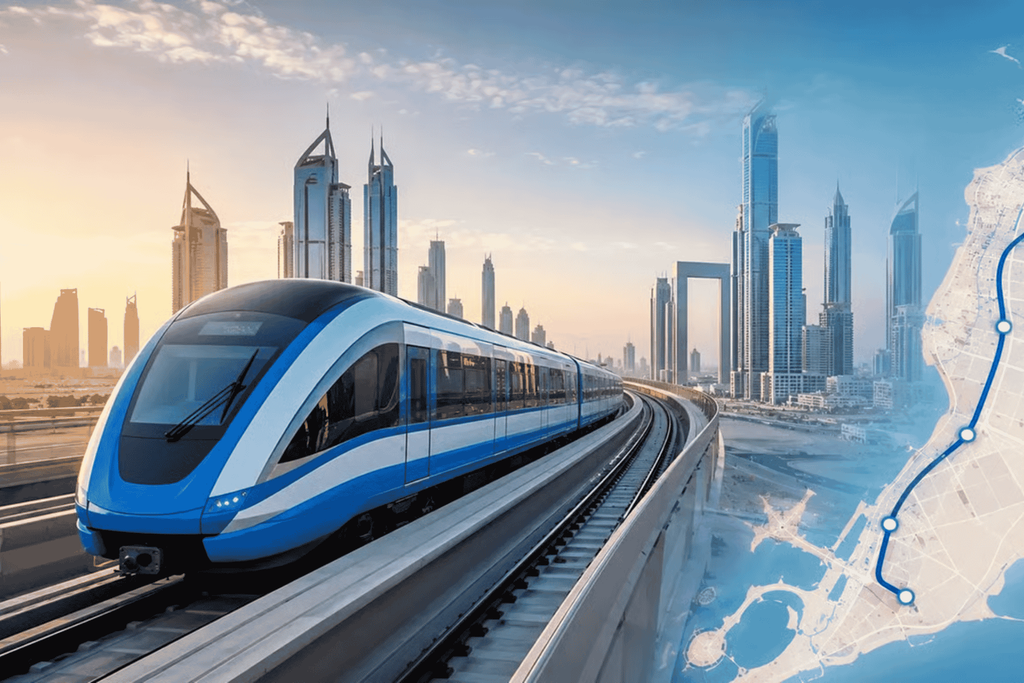
One of the most important infrastructure developments to watch is the Dubai Metro Blue Line.
The Roads and Transport Authority’s project covers 30 km and 14 stations, connecting important residential, academic, economic and tourism districts. The official target for opening is 9 September 2029.
This is potentially relevant to DLRC’s long-term investment story, but investors should be careful about treating future infrastructure as an existing benefit.
The Metro Blue Line is a future catalyst, not a reason to assume today’s property automatically deserves a premium.
What’s driving investor interest
The strongest argument for DLRC is the combination of existing demand, relatively accessible pricing and continued development.
Unlike a completely new district where investors are waiting for the first residents and amenities to arrive, DLRC already has an established residential population.
Dubai Holding Communities currently reports approximately 21,200 residents, 49 buildings and 38 recreational amenities.
At the same time, the area continues to attract new development.
That combination creates an interesting investment profile: DLRC is already functioning as a residential market, but parts of the community are still evolving.
The transaction data supports the view that investors are actively participating.
Bayut’s DLRC transaction data — based on DLD-linked data — records 8,114 property sales over the previous 12 months, with an average transaction price of approximately AED 915,000 and an average price of AED 1,394 per sq ft.
A separate dataset using Dubai Land Department transactions recorded 4,188 sales between January and July 2026, with a median price of approximately AED 1,435 per sq ft and an off-plan share of approximately 92%.
The exact figures differ because the datasets use different periods and methodologies, but the broader signal is consistent: DLRC is an active, heavily off-plan residential market rather than a purely theoretical growth area.
Pricing versus comparable communities
Pricing is where the DLRC investment story becomes more interesting.
Current market sources put DLRC’s price per square foot broadly in the AED 1,300–1,450 range, depending on the source, measurement period and whether the data represents asking prices or completed transactions.
Bayut’s July 2026 property index records an overall price of approximately AED 1,286 per sq ft, down 4.15% over the previous 12 months. Its off-plan index places the figure at approximately AED 1,302 per sq ft.
By comparison, a DLD-based dataset covering January–July 2026 puts the DLRC median at approximately AED 1,435 per sq ft.
This difference is precisely why investors should avoid using a single market-wide number without explaining its source.
Current DLRC price indicators
| Indicator | Current figure |
|---|---|
| Bayut overall price index | AED 1,286/sq ft |
| Bayut off-plan index | AED 1,302/sq ft |
| DLD-based Jan–Jul 2026 median | AED 1,435/sq ft |
| Bayut average transaction price | AED 915,000 |
| Bayut sales transactions, last 12 months | 8,114 |
Sources: Bayut Property Market Analysis, Bayut DLD-linked transactions, and DLD-based market data.
For comparison, DLD-based 2026 data puts Jumeirah Village Circle at approximately AED 1,467 per sq ft, while Business Bay is approximately AED 2,462 per sq ft in the same dataset.
That makes DLRC potentially attractive to investors who want exposure to Dubai property without paying the same entry price associated with some of the city’s more established locations.
But price per square foot alone is not enough.
A DLRC apartment at AED 1,300 per sq ft is not automatically better value than a JVC apartment at AED 1,450 per sq ft. Investors need to compare the developer, building quality, amenities, service charges, payment plan, completion status, rental demand and expected resale liquidity.
For a broader explanation of how to assess Dubai property prices, see Grovy’s Dubai Price Per Square Foot Explained.
Which DLRC properties are actually moving?
The market data also shows that DLRC is not being driven by one project.
Bayut’s current transaction data lists significant transaction volumes across projects including:
- Cove Grand Residence by Imtiaz
- Peace Lagoons II
- Samana Boulevard Heights
- Peace Lagoons
- Weybridge Gardens 4
- Le Blanc by Imtiaz
- Samana Parkville
- Reef 998
- Cove Edition Residence
- Cybele by Wadan
Bayut records Cove Grand Residence by Imtiaz with 514 transactions in its latest 12-month dataset, followed by Peace Lagoons II with 474 and Samana Boulevard Heights with 461.
This is useful for investors because it shows that DLRC’s activity is spread across multiple projects rather than depending entirely on one development.
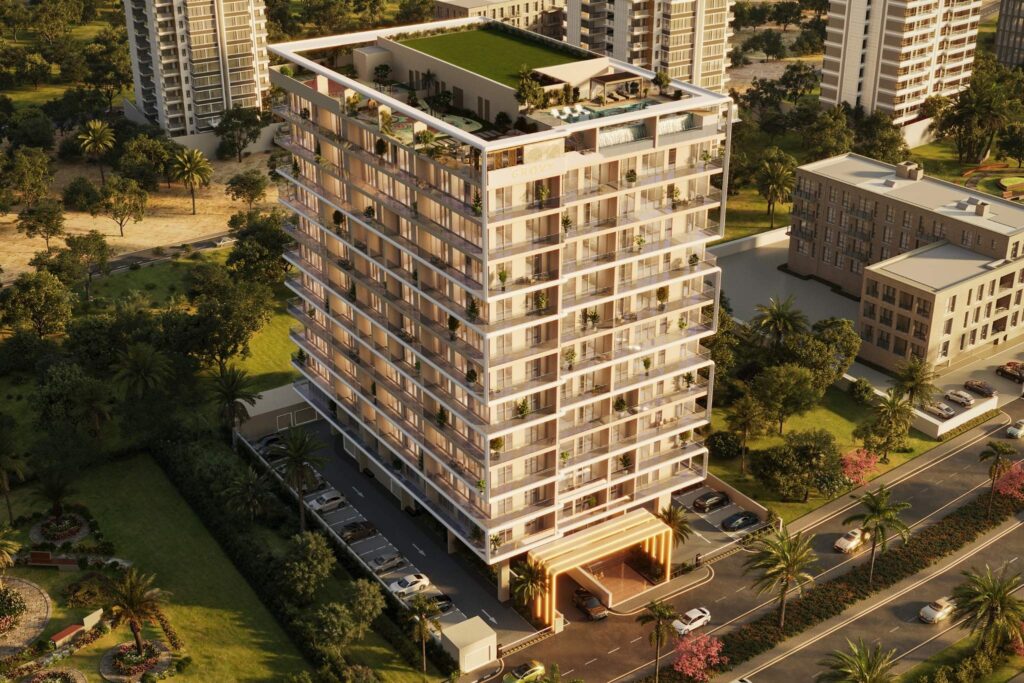
What about RIVO by Grovy?
For buyers specifically considering RIVO by Grovy, current market data provides an additional benchmark.
Bayut’s July 2026 index lists Rivo by Grovy at approximately AED 1,292 per sq ft, with the index showing approximately 5.59% growth over three months and 8.52% over six months.
The off-plan index similarly places RIVO at approximately AED 1,293 per sq ft, with approximately 5.65% three-month growth and 8.58% six-month growth.
This provides a useful example of why investors should look at project-level pricing rather than relying only on a DLRC-wide average.
A community average tells you where the market is. Project-level data helps you determine whether the specific property you are considering is priced competitively within that market.
Who this fits
DLRC can potentially suit both growth-focused and income-focused investors, depending on the project selected.
Growth-focused investors
Investors with a medium- to long-term horizon may find DLRC attractive because the community is still evolving.
The combination of existing residents, ongoing residential development and future infrastructure creates the possibility of further maturation.
The Metro Blue Line could become an additional catalyst if the final network materially improves accessibility to the area. The official RTA target is to open the Blue Line on 9 September 2029.
But the growth thesis requires patience.
Investors should not assume that every project in DLRC will appreciate at the same rate. Developer quality, building positioning, supply competition and handover timing will influence individual performance.
Income-focused investors
DLRC can also work for investors prioritising rental income because it is already an occupied community rather than a development waiting for its first tenants.
Its proximity to Academic City, Dubai Silicon Oasis and other employment and education clusters gives landlords access to multiple potential tenant segments.
However, investors should calculate net yield rather than simply relying on advertised gross yields.
The calculation should include:
Annual rent – service charges – vacancy – maintenance – management fees – financing costs ÷ total acquisition cost.
That gives a much more realistic picture of the investment than a headline rental-yield percentage.
For a broader comparison between growth-focused off-plan investments and ready properties, see Grovy’s Off-Plan vs Ready Property in Dubai.
Risks and open questions to weigh
DLRC’s growth story does not come without risks.
1. Future supply
The continued launch of new projects means investors need to consider the possibility of increased competition between landlords.
A growing population can absorb new supply, but if new units enter the market faster than tenant demand grows, rental growth can slow.
2. Developer and project differentiation
Because DLRC contains projects from numerous developers, the community-wide average can hide substantial differences between individual buildings.
Investors should examine:
- Developer track record
- Construction progress
- Handover history
- Service charges
- Amenities
- Unit layouts
- Parking provision
- Payment plan
- Current rental rates
- Resale transactions
- Competing projects nearby
3. Construction and community maturity
DLRC is still evolving. Some parts of the community have established buildings and amenities, while other areas continue to experience construction activity.
That means investors buying off-plan need to be comfortable with the development timeline and the possibility that the surrounding environment will continue changing before the community reaches greater maturity.
4. Future infrastructure should not be treated as guaranteed current value
The Dubai Metro Blue Line is a significant future infrastructure project, but its benefits should be considered as part of a longer-term investment thesis.
The RTA currently targets opening on 9 September 2029, so buyers should evaluate whether the property makes sense without relying entirely on the future metro connection.
The bottom line
DLRC is worth watching because it sits at an interesting point in Dubai’s residential cycle: it already has residents, transactions and rental demand, but it still has substantial development and infrastructure ahead of it.
Current market indicators place DLRC broadly around AED 1,300–1,450 per sq ft, while DLD-linked transaction data shows significant sales activity and a high proportion of off-plan purchases.
The opportunity, however, is not simply “buy DLRC.”
The smarter approach is to compare individual projects within DLRC on price per sq ft, developer track record, rental evidence, service charges, payment structure, handover timeline and location within the community before deciding whether the numbers actually work.
Want the specific numbers on DLRC? Talk to the Grovy team →