Looking for the best areas to invest in Dubai in 2026? Whether your priority is capital growth, rental income, lifestyle or long-term wealth creation, the right Dubai community depends on what you want your property investment to achieve.
“What’s the best area to invest in Dubai?” sounds like a straightforward question. In reality, there is no single answer.
The right location depends on what you are actually trying to optimise: capital growth, rental income, accessibility, lifestyle, liquidity or long-term wealth creation.
An emerging waterfront destination may offer a different opportunity from an established rental market. A premium address may offer stronger lifestyle appeal and resale visibility, while a mid-market community can provide a lower entry point and potentially higher rental returns.
That is why, rather than creating a generic ranking, it makes more sense to look at Dubai’s property market through the lens of the investor’s objective.
Dubai entered 2026 with continued real estate activity. According to the Dubai Land Department (DLD), the emirate recorded AED 252 billion in real estate transactions in Q1 2026, representing a 31% year-on-year increase in transaction value. Real estate investments reached AED 173 billion across 57,744 investments, while the number of investors increased by 8%.
The question for investors, therefore, is not simply whether Dubai is attracting investment. It is where and why you should invest.
How we chose these areas
Instead of ranking communities from “best” to “worst”, this guide groups selected Dubai areas according to the investment objective they may be better suited to.
The analysis considers factors including:
- Current pricing and entry point
- Rental returns
- Existing tenant demand
- Community maturity
- Infrastructure and connectivity
- Development pipeline
- Lifestyle appeal
- Potential for long-term value creation
Market figures referenced below should also be viewed in context. Area-level figures can differ depending on whether the source measures advertised asking prices, completed transactions or projected rental returns.
For example, Bayut’s H1 2026 sales report is based primarily on advertised property prices on its platform, while its ROI figures are projected market returns.
With that distinction in mind, here are some of the areas worth watching in 2026.
For Capital Growth: Emerging and Early-Stage Areas
Dubai Islands
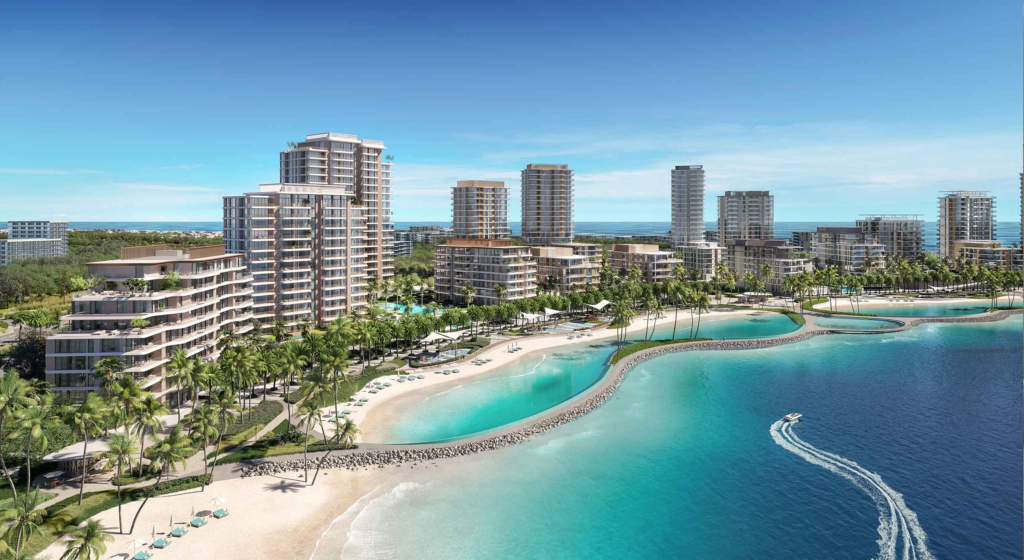
Dubai Islands is one of the more prominent emerging waterfront destinations in Dubai, making it particularly relevant for investors with a longer investment horizon.
The masterplan spans 18.6 square kilometres across five interconnected islands, with approximately 57 kilometres of coastline, including 21 kilometres of beachfront. The development is planned to accommodate more than 231,000 residents across approximately 49,000 homes, alongside resorts, marinas, retail and leisure destinations.
Importantly, the development story is moving beyond planning.
In April 2026, Nakheel awarded a AED 527 million infrastructure contract for Island B covering roads, utilities, drainage, sewage, telecoms and other essential infrastructure. Dubai Islands is also connected to the mainland through three bridges linked to the Al Shindagha Corridor, with Dubai International Airport approximately 10 kilometres away and Downtown Dubai approximately 15 kilometres away.
These infrastructure milestones matter because large-scale masterplans typically depend on connectivity, utilities and supporting infrastructure to unlock subsequent residential, hospitality and commercial development.
What does Dubai Islands cost?
Current Property Finder listing data places the average asking price in Dubai Islands at approximately AED 2,716 per sq. ft., with an average listed property price of around AED 3.51 million and reported year-on-year growth of 17.92%. Importantly, these figures are based on the platform’s last 12 months of listing data, rather than completed DLD transactions.
That distinction is important for investors.
Dubai Islands should not be viewed as a guaranteed appreciation play. Rather, it represents an opportunity to gain exposure to an evolving waterfront destination while the wider masterplan continues to mature.
Best suited to: Investors with a multi-year horizon who are comfortable with development-stage risk and are looking for exposure to a major waterfront masterplan.
Dubai Land Residence Complex (DLRC)
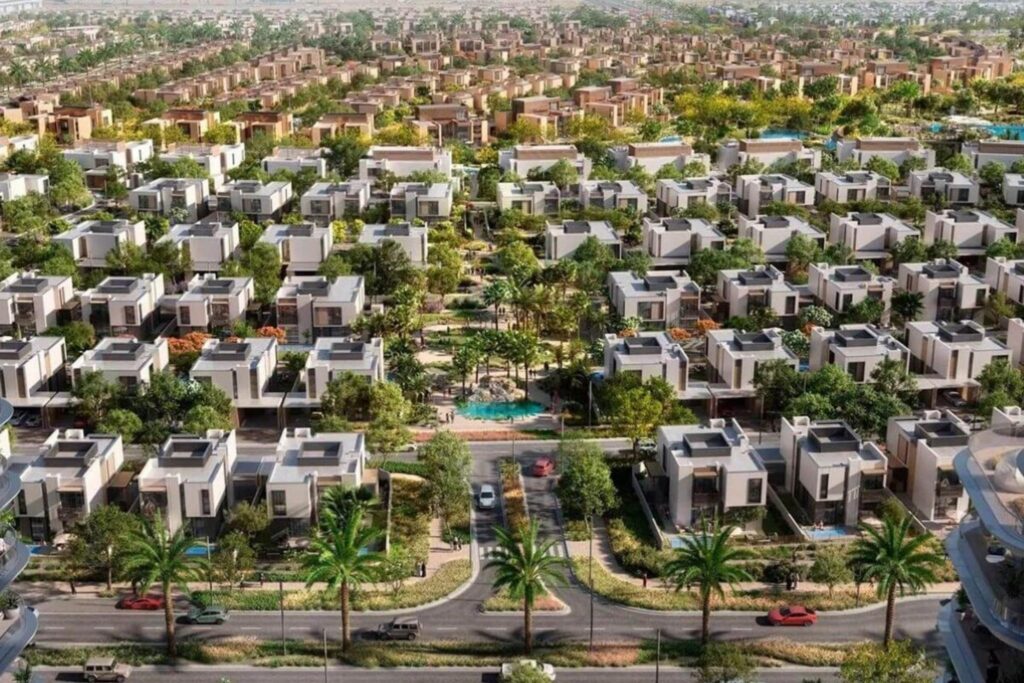
For investors looking for a lower entry point while still gaining exposure to Dubai’s expanding residential market, Dubai Land Residence Complex (DLRC) is another area worth considering.
Unlike Dubai’s most established premium districts, DLRC offers a comparatively accessible price point. This makes it relevant to investors who want to balance entry price, rental demand and longer-term community development.
Its appeal also comes from transaction activity. Rather than relying solely on marketing descriptions of the community, investors should look at actual market activity, pricing trends and the supply entering the area when evaluating the opportunity.
For Grovy, DLRC is particularly relevant as the location of RIVO by Grovy, giving investors an opportunity to consider an emerging residential location alongside a specific development rather than looking at the community in isolation.
Best suited to: Investors seeking a comparatively accessible entry point and exposure to a developing residential corridor, particularly those with a medium- to long-term investment horizon.
For Rental Income: Established, In-Demand Communities
If your priority is rental income, the investment equation changes.
An investor buying for immediate rental income generally has a different set of priorities from someone buying into an emerging masterplan. Existing tenant demand, achievable rents, occupancy, purchase price and the availability of comparable properties become particularly important.
Jumeirah Village Circle (JVC)
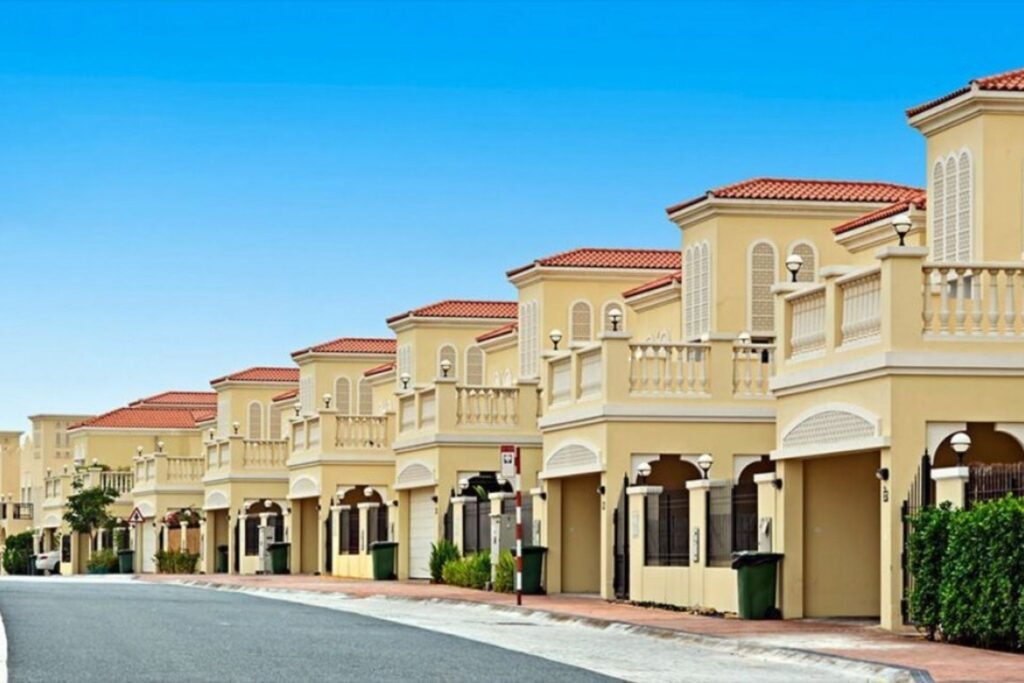
Jumeirah Village Circle remains one of Dubai’s strongest mid-market investment communities.
According to Bayut’s H1 2026 Dubai Sales Market Report, JVC recorded an average advertised price of approximately AED 1,470 per sq. ft. and a projected ROI of 7.15%. The average transaction value reported by Bayut was approximately AED 1.08 million.
The community also remains prominent in Dubai’s rental market. Bayut’s H1 2026 rental report lists JVC among the leading mid-tier rental communities, alongside Business Bay and Arjan.
This combination of relatively accessible pricing, an established residential population and rental demand helps explain why JVC continues to attract both investors and end-users.
For investors, however, headline ROI should not be treated as a guaranteed return. Actual rental performance depends on the building, unit size, condition, furnishing, service charges, tenant profile and achieved rent.
Best suited to: Investors prioritising rental income and looking for a relatively accessible entry point in an established residential community.
Business Bay
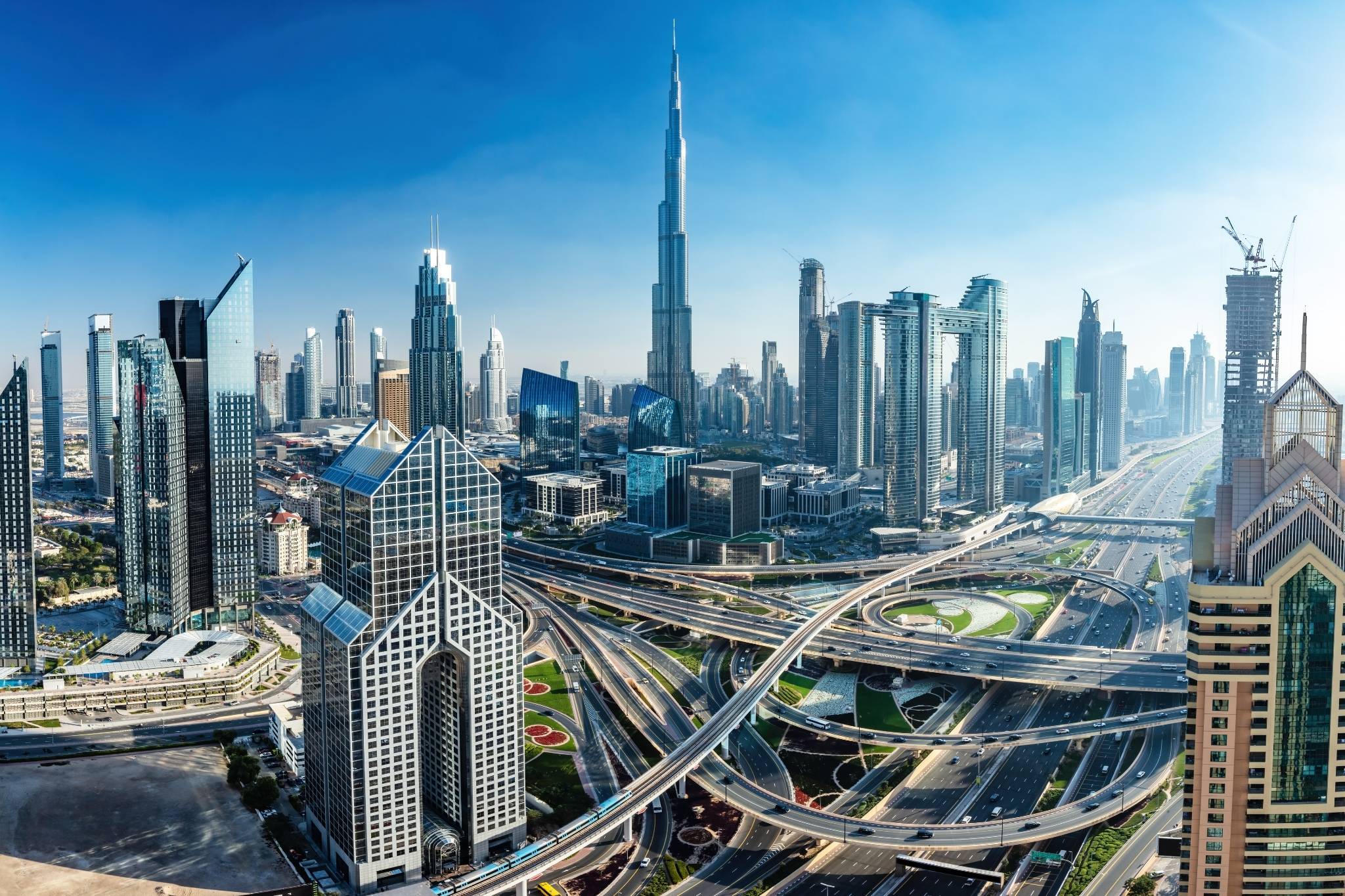
Business Bay offers a different proposition from JVC.
Its central location places it close to Downtown Dubai and major business and lifestyle destinations, making it particularly relevant to tenants who prioritise proximity to workplaces, entertainment and urban amenities.
Bayut’s H1 2026 data puts the average advertised apartment price at approximately AED 2,124 per sq. ft., with a projected ROI of 6.29%.
Business Bay also continues to feature prominently in Dubai’s rental market, with Bayut identifying it as one of the preferred mid-tier rental locations alongside JVC and Arjan.
The investment case here is therefore less about finding the cheapest entry point and more about combining central location, established demand and rental potential.
Best suited to: Investors looking for a balance between rental income, centrality and established tenant demand.
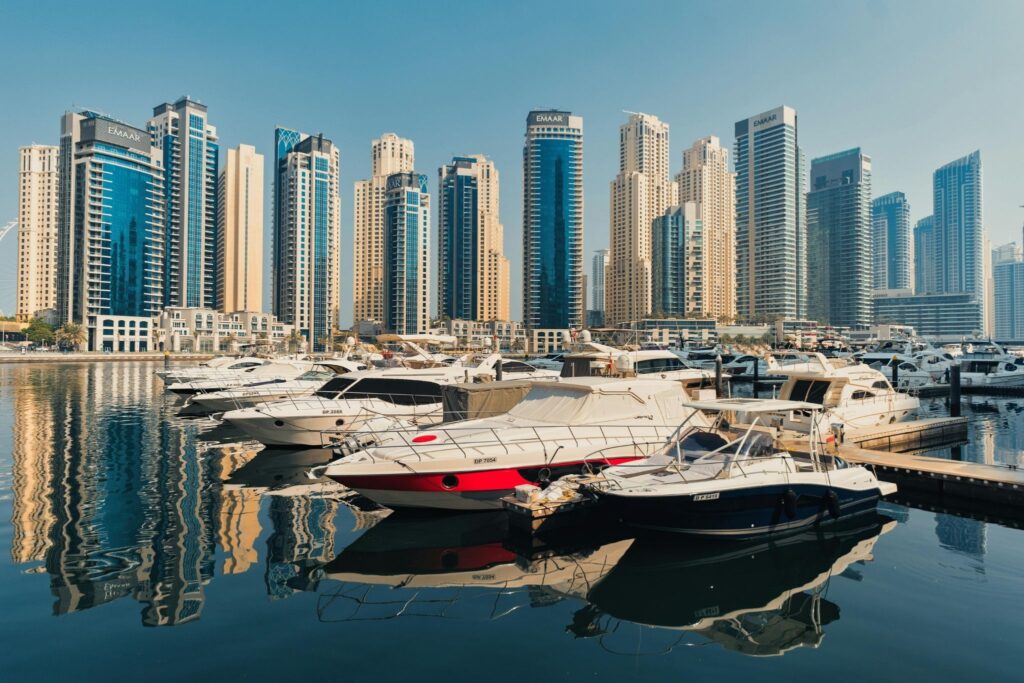
Dubai Marina
For investors who want rental income combined with a premium waterfront lifestyle, Dubai Marina remains one of Dubai’s established options.
Bayut’s H1 2026 sales data records an average advertised apartment price of approximately AED 2,111 per sq. ft. and a projected ROI of 5.88%.
The rental market also continues to show strong interest. Bayut’s H1 2026 rental report identifies Dubai Marina as one of the leading luxury apartment rental destinations, with average annual advertised rents around AED 153,000 across the analysed apartment stock.
The trade-off is straightforward: investors are paying for an established waterfront location and lifestyle, rather than pursuing the highest possible yield.
Best suited to: Investors who want established rental demand, a premium waterfront location and a strong lifestyle proposition.
For Lifestyle, Prestige and Long-Term End-Use
Some investors are not primarily looking for the highest rental yield.
They may be buying a property they intend to occupy, use as a second home or hold for a longer period. In these cases, location quality, amenities, community environment and resale appeal can matter as much as headline ROI.
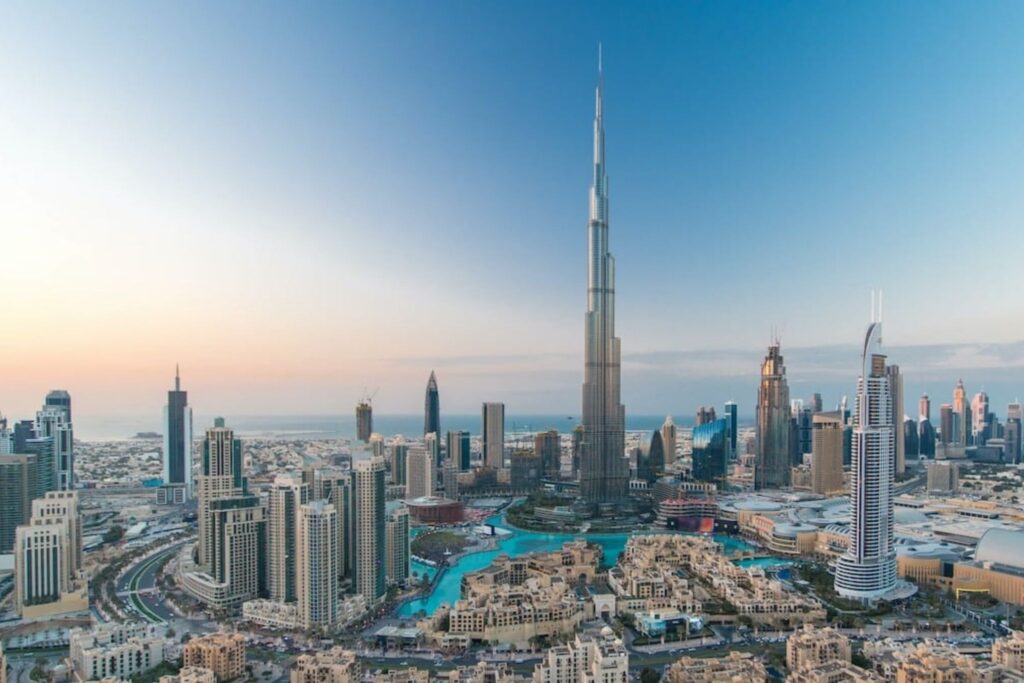
Downtown Dubai
Downtown Dubai represents the premium end of Dubai’s urban residential market.
Its investment proposition is built around centrality, established infrastructure, tourism, hospitality, retail and global recognition rather than low entry pricing.
Bayut’s H1 2026 sales data places the average advertised apartment price at approximately AED 3,179 per sq. ft., with a projected ROI of 5.46%. The average transaction value in its dataset was approximately AED 4.09 million.
Its rental market remains equally established. Bayut identifies Downtown Dubai as one of the leading luxury apartment rental destinations, with average advertised annual rents of approximately AED 226,000 across the analysed stock.
The premium pricing means Downtown is unlikely to be the obvious choice for an investor whose only objective is maximising rental yield.
Instead, its appeal lies in owning property in one of Dubai’s most established and globally recognised urban districts.
Best suited to: Buyers prioritising prestige, central location, lifestyle and long-term ownership.
Dubai Hills Estate
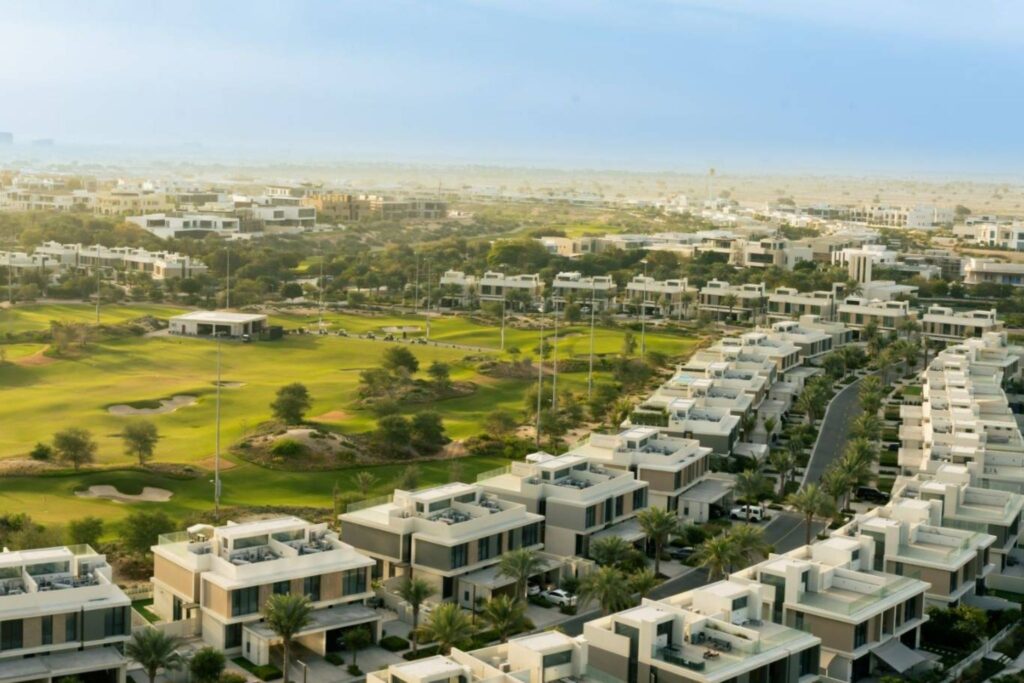
Dubai Hills Estate offers a different lifestyle proposition: a master-planned community combining residential development, green spaces and family-oriented amenities.
For investors, the attraction is less about being in the centre of the city and more about owning within a mature, premium residential environment.
Bayut’s H1 2026 data records an average advertised apartment price of approximately AED 2,522 per sq. ft. and a projected ROI of 6.30%.
The community also performs strongly in the luxury villa segment. Bayut’s H1 2026 data places Dubai Hills Estate at approximately AED 2,870 per sq. ft. for luxury villas, with a projected ROI of around 4.30%.
This demonstrates an important point about Dubai’s property market: the same community can serve different investor profiles depending on the property type.
An apartment may appeal to an investor focused on rental returns, while a villa may be more suitable for an end-user or long-term family investment.
Best suited to: End-users and long-term investors prioritising community quality, family-oriented living and premium residential positioning.
Dubai Property Investment: How the Areas Compare
| Area | Best suited to | Indicative 2026 data | Investment proposition |
|---|---|---|---|
| Dubai Islands | Capital growth potential | ~AED 2,716/sq. ft.* | Emerging waterfront masterplan and major infrastructure investment |
| DLRC | Growth + accessible entry | Emerging residential market | Comparatively accessible entry point and developing residential corridor |
| JVC | Rental income | AED 1,470/sq. ft.; 7.15% projected ROI** | Established mid-market rental demand |
| Business Bay | Rental + centrality | AED 2,124/sq. ft.; 6.29% projected ROI** | Central location and established tenant market |
| Dubai Marina | Rental + lifestyle | AED 2,111/sq. ft.; 5.88% projected ROI** | Established waterfront rental market |
| Downtown Dubai | Prestige + end-use | AED 3,179/sq. ft.; 5.46% projected ROI** | Premium central location and global recognition |
| Dubai Hills Estate | Family + long-term holding | AED 2,522/sq. ft.; 6.30% projected ROI** | Premium master-planned community |
* Dubai Islands figure is based on Property Finder’s last 12 months of listing data, not completed transactions.
** Bayut H1 2026 figures are based primarily on advertised property prices and projected ROI. Bayut states that its advertised-price figures are not representative of completed DLD transactions unless explicitly stated.
So, Which Area Is Actually Best?
The answer depends on your objective.
If your priority is capital growth:
Look closely at emerging and developing destinations such as Dubai Islands and selected growth corridors such as DLRC.
The potential attraction is entering before a community reaches full maturity. The trade-off is that investors need a longer horizon and must be comfortable with development and delivery risk.
If your priority is rental income:
Established communities such as JVC, Business Bay and Dubai Marina provide existing rental markets that can give investors more visibility into tenant demand and achievable rents.
The highest projected ROI is not automatically the best investment, however. Service charges, vacancy periods, furnishing costs, maintenance and purchase price all affect the actual net return.
If your priority is lifestyle and long-term ownership:
Downtown Dubai and Dubai Hills Estate offer established communities and premium positioning, although their higher entry prices may mean that rental yield is not the only reason to buy.
For an end-user, the value of location, amenities, community environment and convenience can outweigh a difference in headline ROI.
The Best Investment Is the One That Matches Your Goal
Dubai’s property market is too diverse to reduce to a single “best area.”
An investor with AED 1 million looking for rental income has a very different requirement from an investor allocating AED 5 million to a long-term waterfront property. Likewise, someone buying a family home should not necessarily use rental yield as the only measure of value.
The more useful question is:
What do you want your property to do for you?
Do you want it to generate rental income?
Do you want exposure to a developing destination?
Do you want a premium property you can eventually live in?
Or are you building a portfolio designed around long-term wealth creation?
Once that objective is clear, the location becomes much easier to evaluate.
Dubai Islands may appeal to investors prepared to take a longer view of an emerging waterfront masterplan. JVC may make more sense for someone prioritising rental returns and accessibility. Business Bay and Dubai Marina offer established urban and waterfront rental markets, while Downtown Dubai and Dubai Hills Estate can appeal to buyers who place greater emphasis on premium positioning and long-term end-use.
There is no universally correct answer.
There is only the location that best matches your investment strategy, budget and timeframe.
Looking for the right Dubai property investment?
At Grovy, we believe property decisions should start with the investor’s objective — not simply the latest trending location.
Whether your priority is wealth creation, rental income, capital growth or long-term ownership, our team can help you compare the opportunity against your budget, timeframe and investment goals.
Not sure which area or property strategy fits you? Talk to the Grovy team and start with the goal — not just the location.
Sources and methodology
Market data referenced in this article is based on publicly available information from the Dubai Land Department, Dubai Holding/Nakheel, Bayut and Property Finder as available in 2026.
DLD data is used for broader Dubai transaction and investment-market context.
Dubai Islands development and infrastructure information is based on Dubai Holding/Nakheel’s official April 2026 announcement.
Area-level sales and ROI figures are based primarily on Bayut’s H1 2026 Dubai Sales Market Report. Bayut notes that its advertised-price data reflects listing prices on its platform and should not be interpreted as completed transaction prices unless specifically identified as such.
Dubai Islands pricing is based on Property Finder’s latest available listing data and should similarly be treated as an indicative asking-price measure rather than an official transaction benchmark.
Investment returns are indicative and are not guaranteed. Actual performance can vary depending on property type, purchase price, financing, service charges, vacancy, maintenance, rental rate, market conditions and other factors.