Everyone knows branded residences command a premium. What fewer people understand is why that premium doesn’t just hold — it grows.
In Dubai, branded residences aren’t a niche luxury segment anymore. They are the fastest-growing category in one of the world’s most competitive property markets. And the gap between their performance and that of conventional developments keeps widening.
Here are the five reasons why.
Why Branded Residences Keep Outperforming in 2026
Reason 1: They Command a Premium That the Market Consistently Justifies
Start with the number that defines the entire category.
As Khaleej Times reported, branded residences in Dubai command an average premium of 64 percent over non-branded units — with some ultra-luxury brands commanding even higher. In Abu Dhabi, that figure rises to 87 percent, driven by extreme scarcity and sustained high-net-worth demand.
Furthermore, The National confirmed that in the UAE, branded residences generally command a 25 to 50 percent price premium over comparable non-branded products on a like-for-like basis across location, specification, and unit size — with hospitality-led brands such as Four Seasons, Mandarin Oriental, and Bulgari typically sitting at the upper end of that spectrum.
That premium isn’t simply brand vanity. It reflects something real — the service infrastructure, the management standards, the design quality, and the lifestyle consistency that a recognised global name guarantees. As Gulf News reported, branded residences tend to hold value when the brand, developer, and operator maintain the quality promised at launch. The strongest projects have clear operating standards, professional asset management, and consistent service delivery.
In other words, the premium is earned — and it compounds over time.
Reason 2: Rental Yields Are Meaningfully Stronger Than Non-Branded Alternatives
For income-focused investors, branded residences deliver a rental advantage that goes well beyond the headline brand name.
As Gulf News confirmed, branded residences in the GCC have outperformed non-branded luxury residential properties in terms of rental yields, averaging 7.6 percent compared to 5.2 percent for non-branded equivalents. That gap — more than two percentage points — is significant when compounded over a five or ten-year holding period.
Furthermore, The National reported that branded residences can appreciate by around 20 percent and bring in an average return on investment of 6.5 to 9 percent, depending on whether they are put up for long-term or short-term rental.
The reason for this rental outperformance is structural. Branded residences attract a specific, high-quality tenant — corporate relocators, international professionals, and short-stay guests who specifically seek the service standards and lifestyle infrastructure that a global brand delivers. That tenant profile means stronger occupancy, fewer voids, and more consistent income than comparable non-branded buildings in the same area.
Additionally, Gulf News reported that branded residences approved for short-term rental — an increasingly common feature, particularly on Dubai Islands — can unlock even stronger income potential from the tourism and business travel market.
Reason 3: They Are Structurally Undersupplied Relative to Demand
One of the most powerful drivers of branded residence performance is something no developer can manufacture: scarcity.
As Khaleej Times reported, Dubai already leads the world in branded residences with 64 completed developments and another 87 projects in the pipeline — with more than 31,000 branded residence units scheduled for delivery by 2030, representing just 8 percent of total future housing supply.
That means that even in the world’s most active branded residence market, the segment represents less than one in twelve units coming to market. Supply is growing — but demand is growing faster.
As Gulf News confirmed, prime villas, branded residences, and waterfront homes remain structurally undersupplied — particularly in established ultra-prime districts — with ultra-high-net-worth buyers remaining active and that demand helping push the luxury segment beyond its post-pandemic boom phase into what many analysts now view as a more mature global asset class.
Furthermore, Khaleej Times confirmed that the MENA region has recorded one of the fastest growth rates for branded residences worldwide over the past five years — rising 187 percent — supported by strong development pipelines across Dubai and the wider Gulf. That pace of demand growth is not being matched by equivalent supply additions. The structural undersupply continues.
Reason 4: Global Brand Recognition Creates a Deeper, More Liquid Buyer Pool
When you own a branded residence, you aren’t selling to local buyers only. You’re selling to a global audience that already trusts the name on the building.
As Khaleej Times confirmed, Dubai has consolidated its position as the world’s capital of branded residences, outpacing legacy luxury real estate hubs such as Miami, London, and New York — with buyers increasingly seeking homes that fuse lifestyle, identity, and community with prestige and long-term value.
Furthermore, Khaleej Times reported that tax positioning and capital security remain central to purchasing decisions — with Dubai’s fiscal efficiency, offering a highly attractive tax environment, making it the preferred destination for international buyers prioritising both lifestyle and long-term capital protection.
That international buyer depth matters enormously for resale. A conventional apartment in Dubai competes primarily within the local and regional buyer pool. A branded residence competes in a global market — one where buyers from London, Singapore, Mumbai, and New York are actively seeking the specific combination of brand trust, lifestyle infrastructure, and UAE tax efficiency that no other market offers in quite the same way.
As Gulf News reported, areas with branded residences have continued to show strong resale activity and limited tolerance for discounts — even as the wider market becomes more price-sensitive. That resale resilience reflects the depth and quality of the buyer pool behind these assets.
Reason 5: Professional Management Protects the Asset Over the Long Term
This is the reason most buyers don’t think about at the point of purchase — but feel most clearly over a ten-year holding period.
Conventional developments age. Without professional management, maintenance quality declines, service standards drop, and the asset quietly loses its edge relative to newer buildings nearby. That deterioration is often invisible in year one or two, but becomes significant by year five and deeply consequential by year ten.
Branded residences are structurally protected against that deterioration. The brand’s reputation depends on maintaining standards — and brands enforce those standards contractually, not just aspirationally.
As Gulf News quoted Abhishek Jalan, CEO of Grovy Developers: branded residences can outperform traditional luxury homes when they operate more like professionally managed hospitality assets. He added that in conventional developments, it is common for long-term maintenance quality and resident experience to deteriorate with poor real estate management or if property owners prioritise reduced operating costs over the quality of the asset.
Furthermore, Gulf News reported in a piece authored by Dimitris Manikis, President EMEA of Wyndham Hotels and Resorts, that branded residences are entering a more demanding phase of their evolution — moving beyond prestige to long-term performance, ESG compliance, and operational resilience. The brands that will define this next phase, Manikis noted, are those that treat the residential product with the same rigour as their hotel operations.
That operational discipline is what separates a branded residence from a branded building. And it’s what makes the asset worth more — not just today, but a decade from now.
The Five Reasons: A Quick Summary
| Reason | What It Delivers |
|---|---|
| Premium pricing | 64% average premium over non-branded in Dubai |
| Stronger rental yields | 7.6% vs 5.2% for non-branded GCC equivalents |
| Structural undersupply | Just 8% of future Dubai supply is branded |
| Global buyer pool | Deeper liquidity, stronger resale resilience |
| Professional management | Asset protection over the long term |
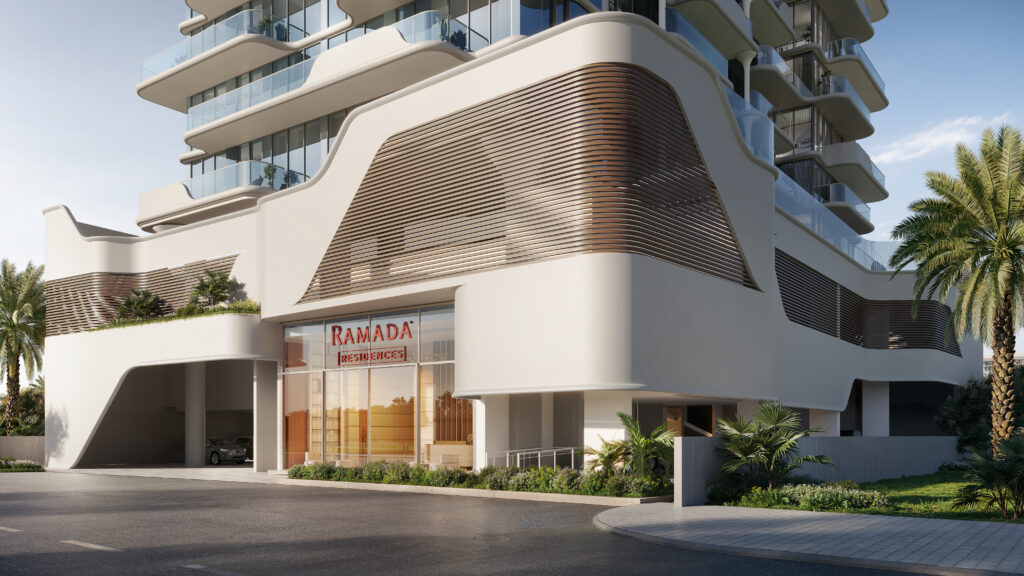
Grovy Perspective: Why We Chose Wyndham for Ramada Residences
At Grovy, every decision we make about a project starts with one question: will this deliver genuine, long-term value for the people who trust us with their capital?
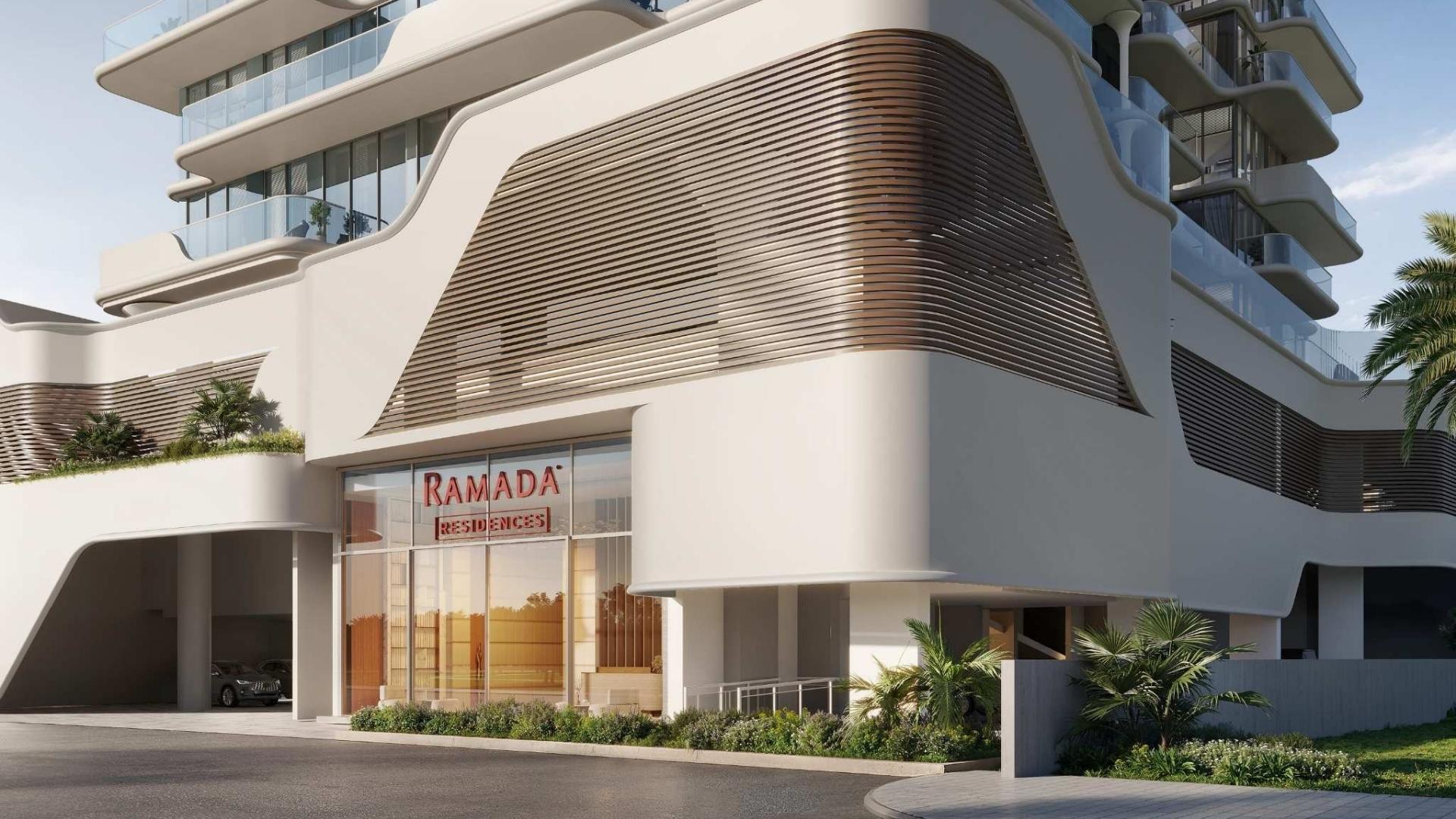
The decision to bring Wyndham Hotels and Resorts into Ramada Residences by Wyndham at Dubai Islands wasn’t made because branded residences are fashionable right now. It was made because the five reasons above are structural, not cyclical. The premium, the yield advantage, the supply scarcity, the global buyer pool, and the professional management standard — all of them apply directly to what we are delivering on Dubai Islands.
As Gulf News confirmed, Wyndham’s approach to branded residences treats the residential product with the same operational rigour as its hotel portfolio — which is exactly the standard we hold ourselves to across every project we deliver.
Branded residences outperform because the fundamentals behind them are real. Ramada Residences by Wyndham is our commitment to making those fundamentals work for every investor who chooses to be part of it.
Conclusion: The Outperformance Isn’t a Trend — It’s a Structure
Branded residences continue to outperform because the reasons behind their performance are structural, not speculative.
A 64 percent price premium backed by genuine service quality. Rental yields that outperform non-branded equivalents by more than two percentage points. Supply that represents less than 8 percent of Dubai’s future housing pipeline. A global buyer pool that no conventional development can access. And professional management that protects the asset decade after decade.
Moreover, as Khaleej Times confirmed, Dubai now leads the world in branded residences — ahead of Miami, New York, London, and every other major luxury real estate hub. The city’s tax environment, lifestyle infrastructure, and buyer depth make it the most powerful place in the world to own one.
The question for investors isn’t whether branded residences outperform. They do — consistently and structurally. The question is which one, in which location, with which operator behind it.
Want to understand what Ramada Residences by Wyndham offers as a branded residence investment on Dubai Islands? Speak to our team — honest answers, no pressure.
Sources & References
- Khaleej Times — khaleejtimes.com
- Gulf News — gulfnews.com
- The National — thenationalnews.com
- Dubai Land Department / RERA — dubailand.gov.ae