What’s Really Happening With UAE Construction Costs in 2026?
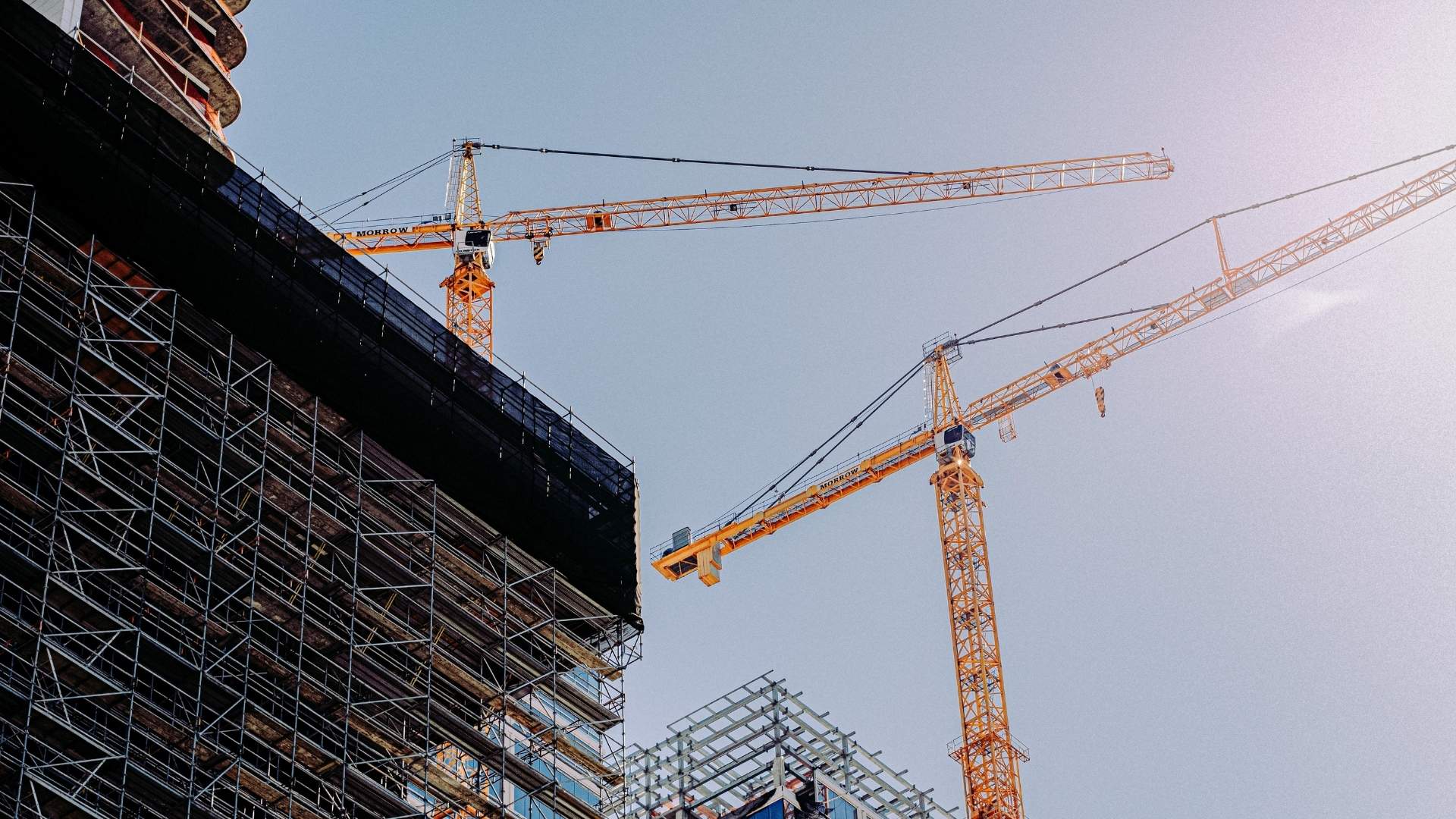
The headlines are stark. UAE Construction Costs have become a topic as materials are more expensive. Projects are slowing. Buyers are asking what it all means for their investment.
Here’s the honest answer — straight from the people managing it on the ground.
UAE Construction Costs in 2026: What the Numbers Actually Show
1. How Much Have UAE Construction Costs Actually Risen?
The numbers are significant. However, the full picture matters just as much.
Abhishek Jalan, CEO of Grovy Developers, confirmed the scale of the problem directly. “From the lowest structural level to finishing, we are seeing on average about a 15 percent increase across materials,” he told The Gulf Pulse. “For major category groups, we are seeing a 12 to 18 percent price increase across the industry.”
That is not a minor adjustment. A 15 percent average increase across the full materials stack hits project budgets hard. Furthermore, it changes what developers build, when they deliver, and how they plan ahead.
According to Khaleej Times, residential construction costs in Q2 2025 ranged from AED 4,200 per square metre for standard villas to AED 11,000 for high-end villas, while apartment construction costs varied between AED 4,300 and AED 9,500 per square metre. Those baselines are now under serious pressure from the current wave of cost inflation.
2. What’s Driving the Increase?
The spike in UAE construction costs has specific causes. Understanding them helps you judge how long this will last.
Steel, aluminium, glass, and specialised mechanical and electrical systems face the most pressure right now. All of them tie directly to global shipping networks and manufacturing hubs outside the UAE.
Grovy’s CEO explained the structural dependency clearly to The Gulf Pulse. The UAE construction sector relies heavily on China — the principal source — and India. Moreover, even locally manufactured products like concrete still depend on imported raw materials. “The construction industry continues to rely on the same few countries for the majority of its imports,” Jalan said.
On top of that, Khaleej Times reported that contractors now face significantly higher input costs, and developers must aggressively compete to secure limited supplies. As a result, steel availability has tightened sharply. Sourcing costs more. It also takes longer.
3. Is This Temporary or Permanent?
Grovy’s CEO told The Gulf Pulse that suppliers currently hold roughly three months of inventory buffers. That buffer is what prevents immediate shortages from hitting sites right now. “However, if the disruption continues for too long, those buffer stocks will start to diminish, and shortages will arise from supply chain interruption,” Jalan said.
Because of this, the team at Grovy is moderating construction activity while waiting for shipping and transit conditions to settle. The expectation is a two to three month window for stabilisation.
Meanwhile, Khaleej Times confirmed that despite the pressure of rising costs, construction continues across major active developments, with materials still available — but at higher prices.
In addition, Gulf News reported that Dubai remains one of the most cost-efficient construction markets in the region, with average build costs well below global peers, and industry participants do not expect a structural breakdown in delivery capacity.
The disruption is real. However, a permanent breakdown is not the base case — not yet.
4. Will UAE Construction Costs Push Up Property Prices?
This is what buyers most want to know. The answer is more nuanced than most headlines suggest.
Grovy’s CEO addressed this directly. “Rising construction costs should not lead to rising off-plan property prices because the market does not have the capacity for this increase,” Jalan told The Gulf Pulse.
Developers simply cannot pass costs onto buyers when affordability is already stretched. So what happens instead? Fewer new launches enter the market. Some projects see slower delivery. Developer margins tighten. However, sudden price spikes do not follow automatically.
Khaleej Times confirmed this, reporting that developers are choosing to absorb additional cost pressures rather than delay projects or pass costs onto buyers, because the current market limits how much buyers can absorb.
Furthermore, Jalan noted that “property prices in the current economic environment are tied to the rental value of the property itself.” In other words, rental demand — not construction cost — anchors pricing in this market.
5. How Are Developers Responding?
The UAE construction sector has faced material cost shocks before. The 2020 pandemic was the most recent. As a result, the industry came out of it with significantly better procurement systems than it had going in.
As Gulf News reported, developers that placed bulk orders for materials well in advance of price increases have held their selling prices and avoided passing costs to buyers — with buying local becoming a core principle for managing cost exposure.
Grovy’s CEO told The Gulf Pulse that patience is the benchmark today. “Wait for the marketplace to settle down before entering into new contracts,” Jalan said. Locking in long-term contracts at today’s elevated prices carries real risk. If costs correct downward later, developers locked into high fixed rates absorb those losses.
In addition, contract structures across the industry are changing. According to The Gulf Pulse, developers and contractors now introduce price adjustment clauses, escalation mechanisms, and more flexible delivery frameworks. The goal is to share risk more fairly rather than absorbing everything on one side during periods of uncertainty.
6. The Long-Term Picture for UAE Construction
Despite the current disruption, the structural case for UAE construction remains firmly intact.
According to Khaleej Times, the UAE construction sector is on track for 22 percent growth, reaching AED 189.59 billion in 2026, driven by economic diversification, tourism, and strategic infrastructure investment. Those drivers did not disappear because material costs rose.
Furthermore, Gulf News reported that more than AED 143 billion in construction contracts were awarded in early 2025, with the bulk of spending tied to energy, infrastructure, and digital capacity. Those contracts are still active. They adjust and continue.
In addition, The National confirmed that demand for building materials is expected to keep rising in the UAE, with major infrastructure projects like the Al Maktoum Airport expansion driving significant ongoing material demand.
The disruption is temporary. The direction of travel has not changed.
7. What This Means for Off-Plan Buyers Right Now
Rising UAE construction costs are not just an industry concern. They affect anyone who has already bought off-plan — or is thinking about it. Here is what you need to know.
Your escrow protection is still working. The DLD requires all off-plan buyer funds to sit in regulated escrow accounts. Developers only access those funds after hitting verified construction milestones. That protection has not changed.
Delays are the real risk — not project collapses. Sustained cost pressure is more likely to cause timeline adjustments than outright failures. Your capital is protected. However, some patience may be required.
Developer quality matters more than ever. As Gulf News reported, developers that integrate construction management and procurement planning early produce fewer handover issues and deliver stronger long-term asset performance. Experienced developers with strong procurement networks handle cost shocks in a very different way from smaller operators who buy materials project by project.
Fewer launches mean tighter future supply. If cost uncertainty slows new project launches over the next 6 to 12 months, that smaller pipeline supports values for properties already under construction. Less future supply means stronger demand for what already exists.
UAE Construction Costs 2026: Key Facts at a Glance
| Factor | Detail |
|---|---|
| Material cost increase | 12–18% across major category groups |
| Most exposed materials | Steel, aluminium, glass, mechanical and electrical systems |
| Current inventory buffers | Approximately 3 months |
| Residential build cost | AED 4,200–11,000 per square metre |
| Apartment build cost | AED 4,300–9,500 per square metre |
| UAE construction market 2026 | AED 189.59 billion — up 22% |
| Developer response | Absorbing costs, moderating new contracts |
| Impact on property prices | Limited — affordability caps cost pass-through |
| Buyer protection | DLD escrow fully intact and operational |
Grovy Perspective: Patience and Preparation Are What This Moment Demands
Rising UAE construction costs are real. At Grovy, we’re managing them directly — and we’re doing it the right way.
As our CEO has publicly stated, we are moderating new contract activity while the market stabilises. We are not rushing into long-term agreements at today’s inflated prices. We are not passing costs to buyers. Our existing projects are progressing. Our escrow accounts are fully compliant.
That’s not a passive response. It’s a deliberate strategy — built on the same principle behind every project we’ve delivered. We don’t commit to what we can’t stand behind.
When conditions stabilise, we will move with the same discipline and clarity that has defined our track record. Because in a market like this one, patience isn’t weakness. It’s exactly what quality looks like.
Conclusion: UAE Construction Costs Are Rising — But the Market Is Absorbing It
The 12 to 18 percent increase in UAE construction costs is real. The causes are clear. The pressure is being felt across every active project in Dubai and Abu Dhabi.
But the market is not breaking. Developers with strong procurement strategies are managing the pressure. Buyers are protected by escrow. And the long-term pipeline — driven by infrastructure investment, population growth, and the largest construction boom in the UAE’s history — hasn’t changed course.
What this moment demands is clarity, not panic. Choose developers who are transparent about costs. Verify your project’s progress through the DLD portal. Trust that a market with this scale of structural demand does not reverse because of a temporary materials shock.
Want to understand how your specific project or investment is being managed through this environment? Speak to our team — honest answers, no pressure.
Sources & References
- The Gulf Pulse — thegulfpulse.com
- Khaleej Times — khaleejtimes.com
- Gulf News — gulfnews.com
- The National — thenationalnews.com
- Dubai Land Department / RERA — dubailand.gov.ae