Dubai Price Per Square Foot Explained: Is It a Good Deal?

You’ll see it on almost every Dubai property listing: AED X per square foot.
It looks precise. It looks comparable. And sometimes it is one of the most useful numbers in a property decision.
But price per square foot in Dubai doesn’t tell you whether a property is actually a good deal on its own.
An apartment priced at AED 2,550 per square foot could be expensive in one location and attractively priced in another. The difference comes down to what you compare it against.
For investors considering off-plan property in Dubai, understanding price per square foot is particularly important because the figure needs to be evaluated alongside location, developer, property quality, payment plan, completion timeline and comparable ready properties.
So, how should you actually read the number?
What Does Price Per Square Foot Actually Mean?
Price per square foot is simply the property’s total price divided by its size.
For example:
AED 1,530,000 ÷ 600 sq ft = AED 2,550 per sq ft
The calculation gives you a normalized figure that makes it easier to compare properties of different sizes.
Imagine you are comparing:
- Apartment A: AED 1.53 million for 600 sq ft
- Apartment B: AED 3.78 million for 1,400 sq ft
Looking only at the total price makes Apartment B appear significantly more expensive.
But when you calculate the price per square foot, you can compare them on a more consistent basis.
That is the real purpose of price per square foot.
It is a comparison tool — not a verdict.
Is a Lower Price Per Square Foot Always Better?
No.
This is one of the biggest mistakes buyers make when comparing Dubai property prices.
A lower AED/sq ft figure may look attractive, but it could reflect:
- A less established location
- Smaller or less efficient layouts
- Lower-quality finishes
- Fewer amenities
- A lower floor
- Less attractive views
- Higher service charges
- A newer or less established developer
- Greater future supply
- A payment structure that changes the investment equation
Similarly, a higher price per square foot does not automatically mean you are overpaying.
A premium may be justified by:
- Prime waterfront positioning
- A highly established community
- Strong connectivity
- Sea or skyline views
- Branded residences
- Premium amenities
- Developer reputation
- Limited supply
- Strong rental demand
This is why AED 2,550 per square foot cannot be classified as “cheap” or “expensive” without context.
How Should You Benchmark Dubai Price Per Square Foot?
The most useful comparison is with actual comparable transactions, rather than simply comparing asking prices.
The Dubai Land Department’s real estate data platform provides transaction, rental, valuation, unit, building and project data that can be used to research Dubai’s property market.
Dubai Land Department – Real Estate Data
When evaluating a property, try to compare its price per square foot against three reference points.
1. Comparable Properties in the Same Building
This is usually the most relevant benchmark.
If two similar two-bedroom apartments in the same building have recently sold at AED 2,500 and AED 2,600 per sq ft, a new listing at AED 2,550 per sq ft becomes much easier to assess.
You are comparing like with like.
2. Comparable Properties in the Same Community
The next level is the surrounding community.
Compare properties with similar:
- Age
- Size
- Bedroom configuration
- Amenities
- Location
- Views
- Completion status
A new development should not necessarily be compared directly with an older building simply because both are in the same neighborhood.
3. Comparable Ready Properties
This becomes particularly important when evaluating off-plan property.
An off-plan project priced at AED 2,550 per sq ft may initially look attractive if comparable ready properties are selling for AED 2,700 per sq ft.
But you need to ask why the difference exists.
Is the discount compensating investors for waiting for completion?
Is the project in an earlier stage of development?
Is the developer offering a more flexible payment plan?
Or does the ready property have advantages that justify its premium?
Price Per Square Foot vs Total Price
Another common mistake is focusing so heavily on AED/sq ft that you forget about the actual amount you are paying.
Consider two properties:
Property A
600 sq ft × AED 2,550/sq ft = AED 1.53 million
Property B
800 sq ft × AED 2,400/sq ft = AED 1.92 million
Property B has the lower price per square foot.
But you are still paying AED 390,000 more.
That may be completely justified if the additional 200 sq ft gives you a significantly better layout, an extra bathroom, better views or stronger rental appeal.
The question isn’t:
“Which one has the lower price per square foot?”
It is:
“What am I getting for every dirham I invest?”
Don’t Forget the Difference Between Net and Gross Area
This is another reason buyers should look beyond the headline number.
The area shown in a property listing may include different components depending on how the property is presented.
You should clarify whether the quoted size relates to:
- Internal area
- Total saleable area
- Balcony or terrace
- Common areas
- Other allocated spaces
A property with a large terrace can appear to offer a lower price per square foot when the calculation uses the total saleable area.
That doesn’t necessarily make it a better or worse deal.
It simply means you need to understand what the square footage actually represents.
For additional questions buyers should ask before purchasing, see our Dubai Property Buyer FAQ.
Off-Plan vs Ready: Why Price Per Square Foot Can Be Misleading
This is where the calculation becomes much more interesting.
Suppose you are comparing:
Off-Plan Property
AED 2,550/sq ft
with:
Ready Property
AED 2,700/sq ft
At first glance, the off-plan property appears to be the better deal.
But the two investments may require very different amounts of capital at different stages.
Off-plan properties typically use a payment plan that spreads payments over the construction period, while a ready property generally requires a much larger payment upfront or through mortgage financing.
Our guide to off-plan vs ready property in Dubai explains this difference in greater detail.
So the better question isn’t simply:
“Which property has the lower price per square foot?”
It is:
“Which property gives me the better combination of price, capital commitment, income timeline and potential appreciation?”
A Simple Example: AED 2,550 vs AED 2,700 Per Square Foot
Let’s say you are comparing two similar two-bedroom apartments.
Option A – Off-Plan
- Size: 1,000 sq ft
- Price: AED 2,550/sq ft
- Total price: AED 2.55 million
- Payment plan: 60/40
- Completion: Three years
Option B – Ready
- Size: 1,000 sq ft
- Price: AED 2,700/sq ft
- Total price: AED 2.70 million
- Payment: Essentially upfront
- Rental: Potentially available immediately
The off-plan property is AED 150,000 cheaper.
But that doesn’t automatically make it the better investment.
The off-plan investor may benefit from:
- Lower initial capital requirement
- Staged payments
- Potential capital appreciation before completion
- Access to a new development
The ready-property investor may benefit from:
- Immediate occupancy
- Immediate rental potential
- Greater visibility on actual building quality
- Existing rental comparables
- No construction waiting period
So the decision depends on the investor.
Lower price per square foot does not necessarily equal higher investment value.
Why Location Can Change the Meaning of AED 2,550 Per Square Foot
The same price per square foot can mean completely different things in different parts of Dubai.
For example, AED 2,550/sq ft in an established prime waterfront location could represent a very different proposition from AED 2,550/sq ft in an emerging residential community.
This is why investors should always ask:
What does the surrounding market trade at?
And:
What is likely to drive demand for this location in the future?
For example, when looking at an emerging community such as Dubai Land Residence Complex, investors may focus more heavily on connectivity, infrastructure, new development and future residential demand.
When looking at a destination such as Dubai Islands, the investment conversation may place greater emphasis on waterfront positioning, hospitality, tourism and lifestyle demand.
The price per square foot is only the starting point.
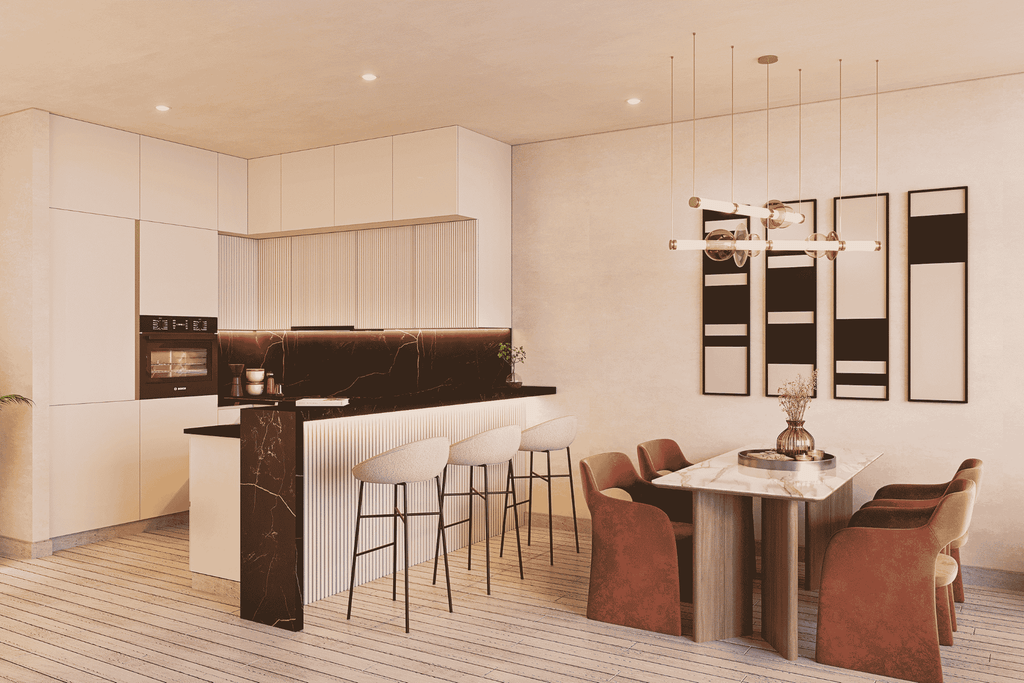
Price Per Square Foot and RIVO by Grovy
RIVO provides a useful example of why price per square foot needs context.
The project is located in Dubai Land Residence Complex (DLRC) and offers multiple apartment configurations.
Instead of evaluating RIVO’s price purely against a Dubai-wide average, an investor should compare it with:
- Other developments in DLRC
- Similar new-build projects
- Comparable apartment sizes
- Nearby ready properties
- Recent transaction prices
- Payment plans
- Amenities and specifications
You can explore RIVO by Grovy for the project’s current specifications and unit options.
The more relevant question is not whether RIVO’s price per square foot is lower or higher than the Dubai average.
It is whether the price makes sense relative to comparable properties offering a similar investment proposition.
Price Per Square Foot and Ramada Residences by Wyndham
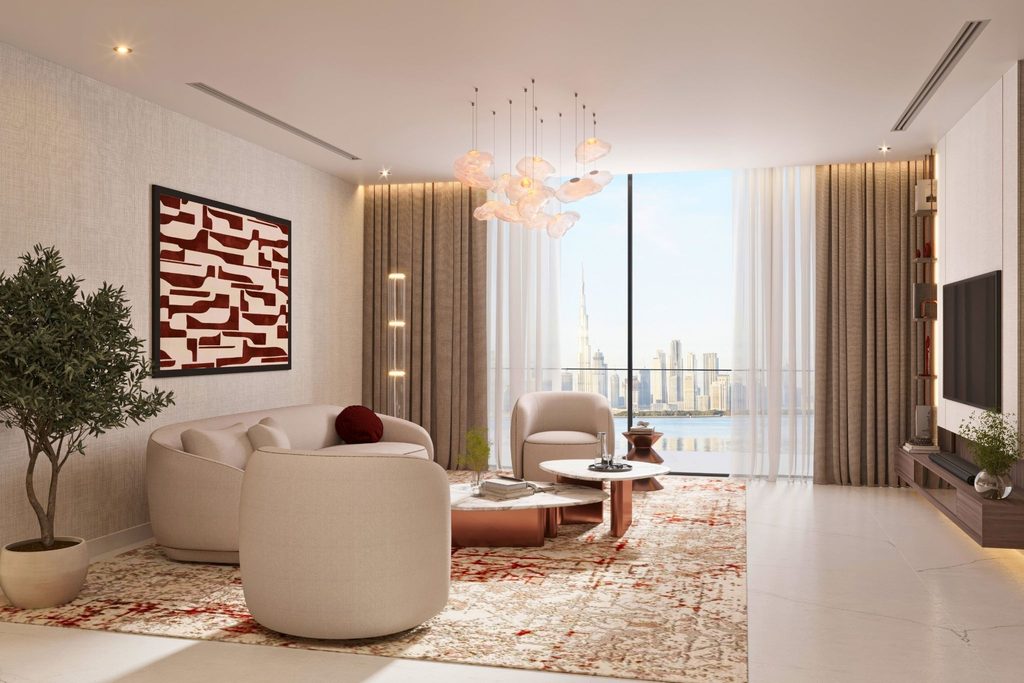
The same principle applies to branded residences.
Ramada Residences by Wyndham at Dubai Islands is positioned differently from a conventional residential development, with a waterfront location, furnished residences and hospitality branding.
That means an investor should not compare its AED/sq ft figure only against an average apartment elsewhere in Dubai.
A more useful comparison would consider:
- Other Dubai Islands residences
- Waterfront developments
- Branded residences
- Furnished properties
- Hospitality-led projects
- Comparable unit sizes
- Rental positioning
In this case, part of the property’s value proposition comes from the location and brand positioning, not simply the number of square feet.
What About Dubai’s Current Market?
The broader market context also matters.
Dubai Land Department reported AED 252 billion in total real estate transactions in Q1 2026, representing a 31% year-on-year increase in transaction value.
At the same time, market conditions are not identical across every segment or location.
CBRE’s Q2 2026 UAE Real Estate Market Review noted that Dubai’s residential market had moderated during the quarter, with softer demand, declining transaction activity and new supply beginning to ease pricing pressures.
That makes benchmarking even more important.
In a fast-moving market, a property’s asking price can tell you what a seller or developer wants to achieve.
Transaction data gives you a better indication of what buyers have actually paid.
You can also consult the Dubai Land Department’s real estate transaction services when researching market activity.
7 Questions to Ask Before Trusting Any Price Per Square Foot Figure
Before deciding whether a property is a good deal, ask:
1. What are comparable properties actually selling for?
Don’t rely only on current listing prices.
2. Is the comparison genuinely like-for-like?
Compare similar sizes, bedroom types, floors, views and property quality.
3. What does the quoted area include?
Check whether balconies, terraces or other areas are included.
4. Is the property off-plan or ready?
The price needs to be considered alongside the investment timeline.
5. What is my actual cash requirement?
Look at the payment schedule, not just the total property price.
6. What rental income could the property realistically generate?
Compare actual rental transactions and similar units rather than relying solely on advertised yields.
7. What could make this property’s price per square foot increase or decrease?
Think about infrastructure, supply, demand, location, developer reputation and future competing developments.
For a broader guide to evaluating a Dubai property, read our Dubai property buyer guide.
The Bottom Line: Price Per Square Foot Is a Tool, Not an Answer
Price per square foot is one of the most useful numbers in Dubai real estate — when you know how to use it.
An AED 2,550/sq ft property isn’t automatically a bargain.
An AED 3,000/sq ft property isn’t automatically overpriced.
The number only becomes meaningful when you compare it against:
Comparable properties + location + property quality + payment structure + rental potential + investment timeline.
For off-plan investors, this is particularly important. A lower price per square foot may come with a longer wait for income, while a higher-priced ready property may start generating rental income immediately.
For end users, the calculation needs to be balanced against layout, quality, views and lifestyle.
And for investors, the ultimate question is not simply:
“How much am I paying per square foot?”
It is:
“What am I getting for the price I’m paying, and what could that asset be worth in the future?”
That’s the difference between simply comparing property prices and actually evaluating a real estate investment.
Want to Know If a Property Is Actually a Good Deal?
If you have a Dubai property listing and want to understand whether its price per square foot is competitive, talk to the Grovy team.
Send us the listing and we can help you look beyond the headline price — including the property’s location, size, payment structure and comparable investment options.